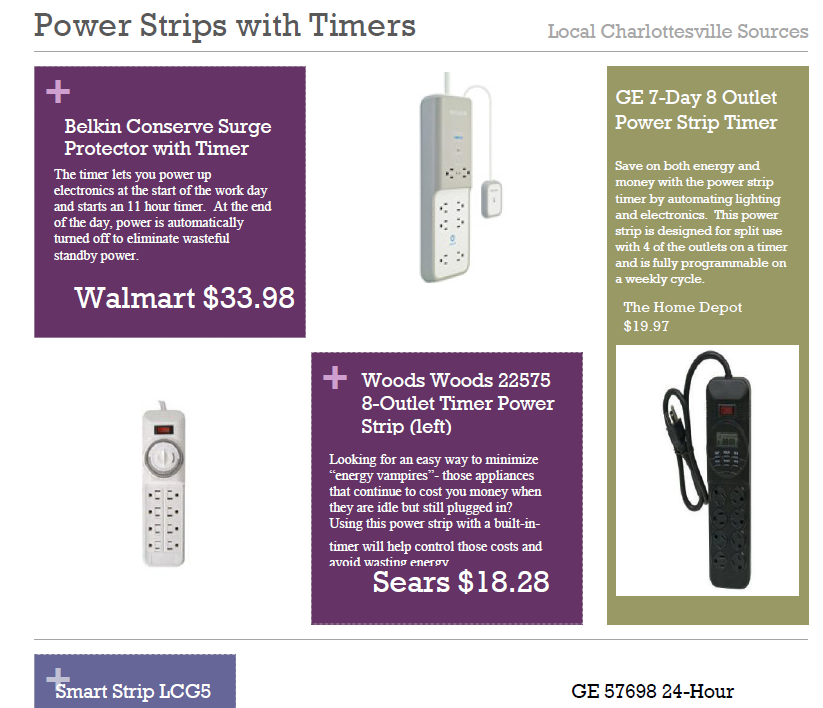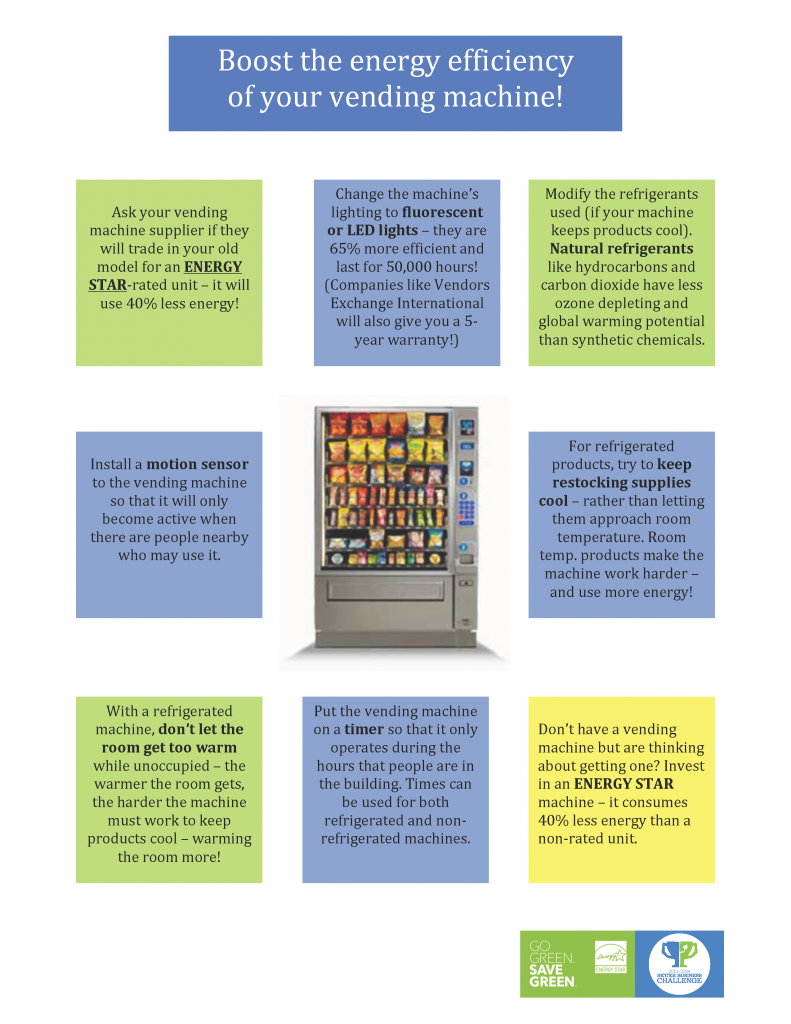
click to open/download a .pdf of this image
Comments Off

click to open/download a .pdf of this image
Comments Off
02 May
Posted in Latest-PastEvents, Leadership, the Latest
Challenge participant Plow & Hearth celebrated Earth Day with Better World Betty and recognized the employee winner of Betty’s Home Menu 30-day challenge!


Comments Off
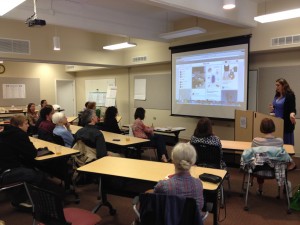
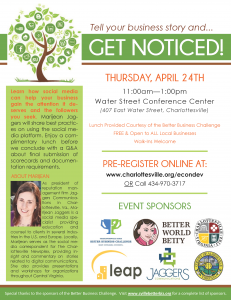 We had a packed house on Thursday (April 24) as we hosted Marijean Jaggers for a lesson on using social media to boost connections with customers.
If you missed it, don’t worry; we’ve got the 5 top take-aways right here:
BONUS Take-away: Take advantage of the many great, paid social media tools out there. If you want help monitoring multiple accounts on Facebook and Twitter, tracking conversations related to your product/industry, or gathering stats on impressions and engagement check out Sprout Social. If you want help expanding your reach, try strategically boosting your posts on Facebook.
Teri Kent also gave a quick summary of the final scorecard and documentation process. Find a detailed overview here.
Still have questions? Send us an email at [email protected].

Comments Off
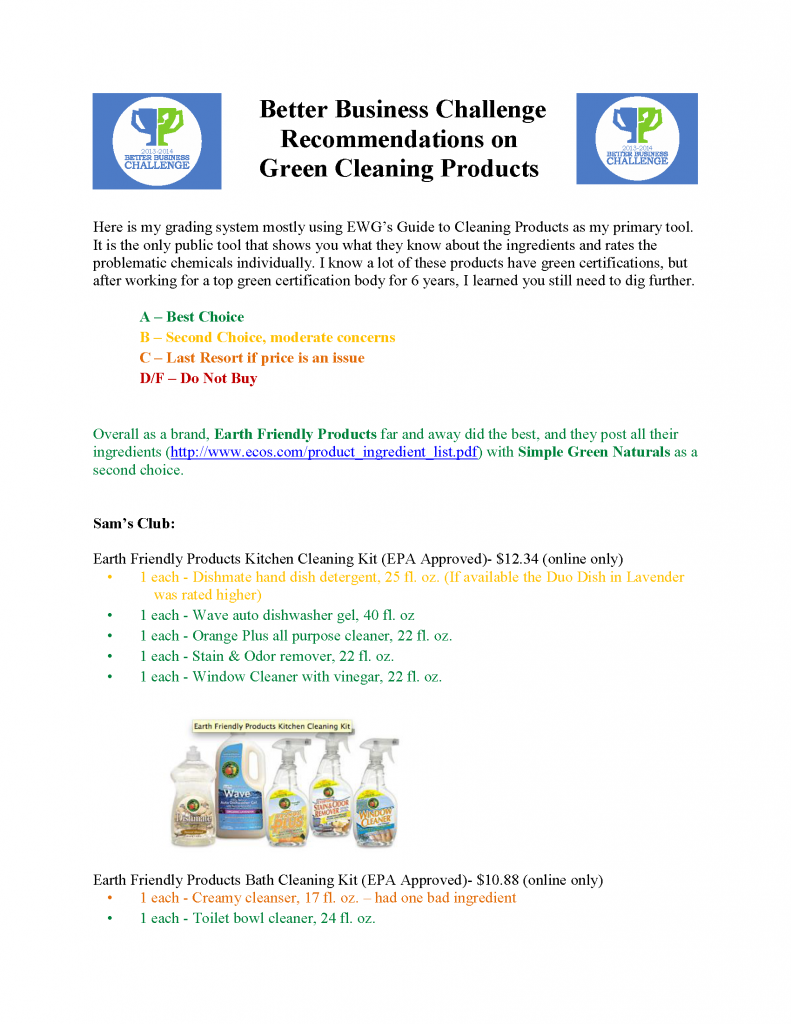 Here is a grading system mostly using EWG’s Guide to Cleaning Products as the primary tool. It is the only public tool that shows you what they know about the ingredients and rates the problematic chemicals individually. A lot of these products have green certifications, sometimes you still need to dig further.
Click on the image or here for the PDF.
Comments Off
Top 5 takeaways from Lunch n Learn
1.) You need a starting line—Benchmark! Use your bills, $ per sq. ft., total kwh, max kw, CO2 footprint
2.) Then analyze: seek to understand how you are using energy, how that use differs from similar buildings, how you are paying for it, what patterns exist?
3.) Which light bulb is the most efficient? The one that is off!
4.) If you can’t turn it off, turn it down!
5.) Control is Key! —Better control = less maintenance, less energy, more comfort, happier people
Comments Off
Information about recycling batteries and light bulbs at Charlottesville’s local Batteries+Bulbs store. Includes a list of what they recycle, additional services, and costs.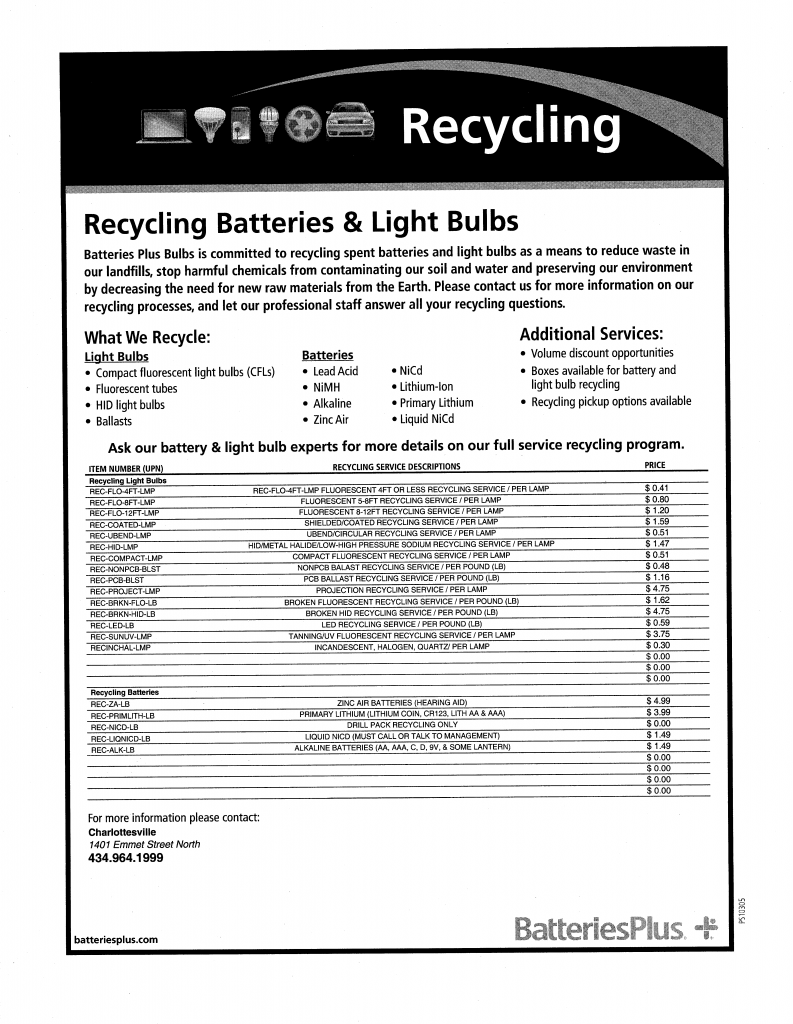
Comments Off
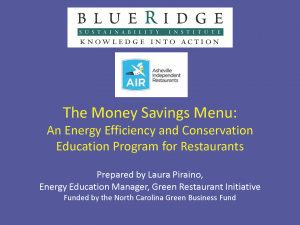 Especially for restaurants, check out these energy efficiency and conservation recommendations by Laura Piraino, the Energy Education Manager and the Green Restaurant Initiative.
The Money Savings Menu: An Energy Efficiency and Conservation Education Program for Restaurants
Comments Off
New for the 2013-2014 Challenge: Energy Benchmarking Tool
For the 2013-2014 Better Business Challenge, LEAP created a very simple and easy energy benchmarking tool that will help give your business an general idea of how you are using energy….if you are average, wasting energy, or efficient…this will be compared to similar building uses in the Southeast.
You only need three inputs:
1. Building Use (easy…office, retail, lodging, medical, etc.)
2. Square Footage of your building/space
3. Total annual energy bill (preferable broken out by gas and electric, but a breakout is not totally necessary).
Using the CBECS data (2003 Commercial Building Energy Survey data from the US Energy Information Administration) and general rules of thumb, this tool will estimate annual savings potential, energy efficiency project estimates to get those savings, payback, and potential added value to your building for lowering energy costs. It will give you a rough idea of where your space stands and can be useful in showing your staff and leadership the value of energy efficiency. A next step would be to have a LEAP contractor come provide more accurate assessments.
Access the Energy Benchmarking Tool here.
Comments Off
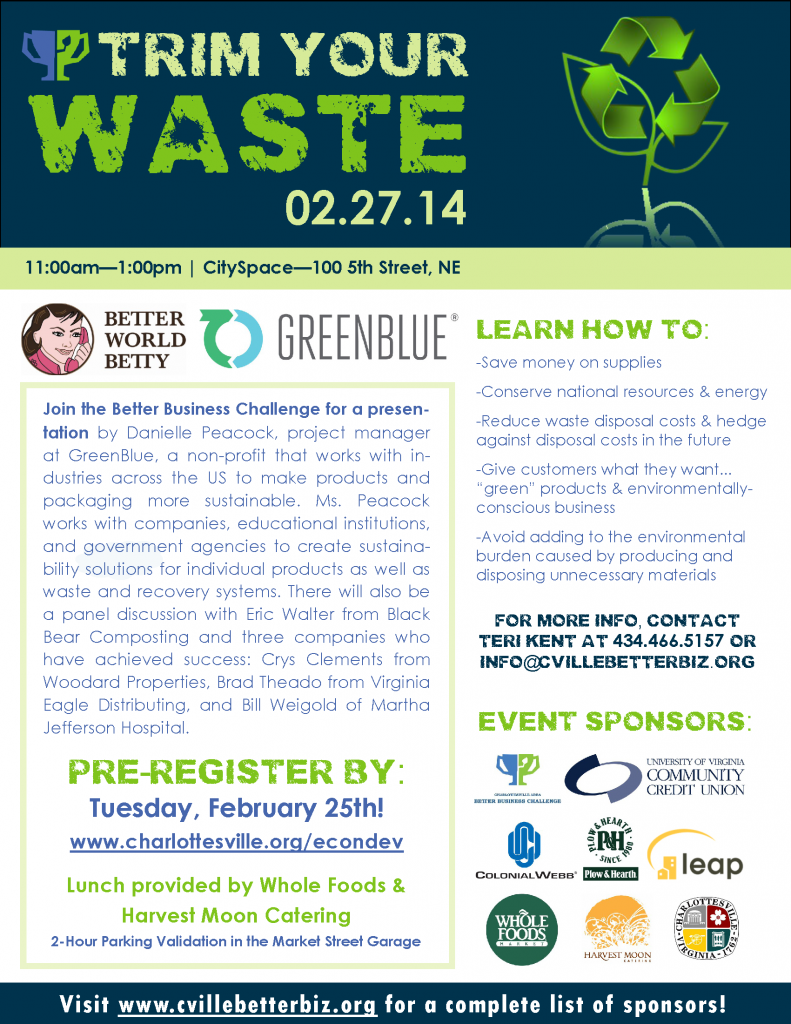 The “Trim Your Waste” Lunch ‘n Learn this past Thursday was a tremendous success! Our speaker and panelists shared so much insight and knowledge – we will never look at waste the same way again! In case you missed the event (or you didn’t take as many notes as you wanted), here are the five biggest takeaways from the event:
Most importantly, just start with something – anything! There are so many ways to make your business’ operations more sustainable that it’s easy to get overwhelmed. Pick something that will be easy to implement, find success, and increase your efforts little by little. Over the long run, it’ll make a big difference!
Looking for more information on reducing your waste? Check out the “Waste” Resources section on the Challenge website. Specifically, check out the Waste Scorecard for easy recommended actions, local waste resources, and other waste tools (e.g. an Excel list of local providers for waste and recycling disposal or a useful glossary of waste terms). If you’ve still got questions, reach out to us at [email protected]!

Comments Off


 Tools: Lighting Assessment and Plug Load Calculators
 BETTER BUSINESS CHALLENGE SUSTAINABILITY PITCH NIGHT
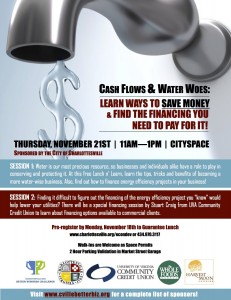 Lunch ‘N Learn Recap: Cash Flows & Water Woes
Better Business Challenge All rights reserved © 2011-2014 |
 |